Yunnan 2025
lijiang, dali, shangri-la, lugu lake
Yunnan was a reset after the weeks alone further north. This time it was a guided trip with family, slower and easier, with someone else handling the logistics for once. We went through Lijiang, Dali, Shangri-La, Pudacuo, and Lugu Lake, so I could spend less time managing the route and more time taking it in.
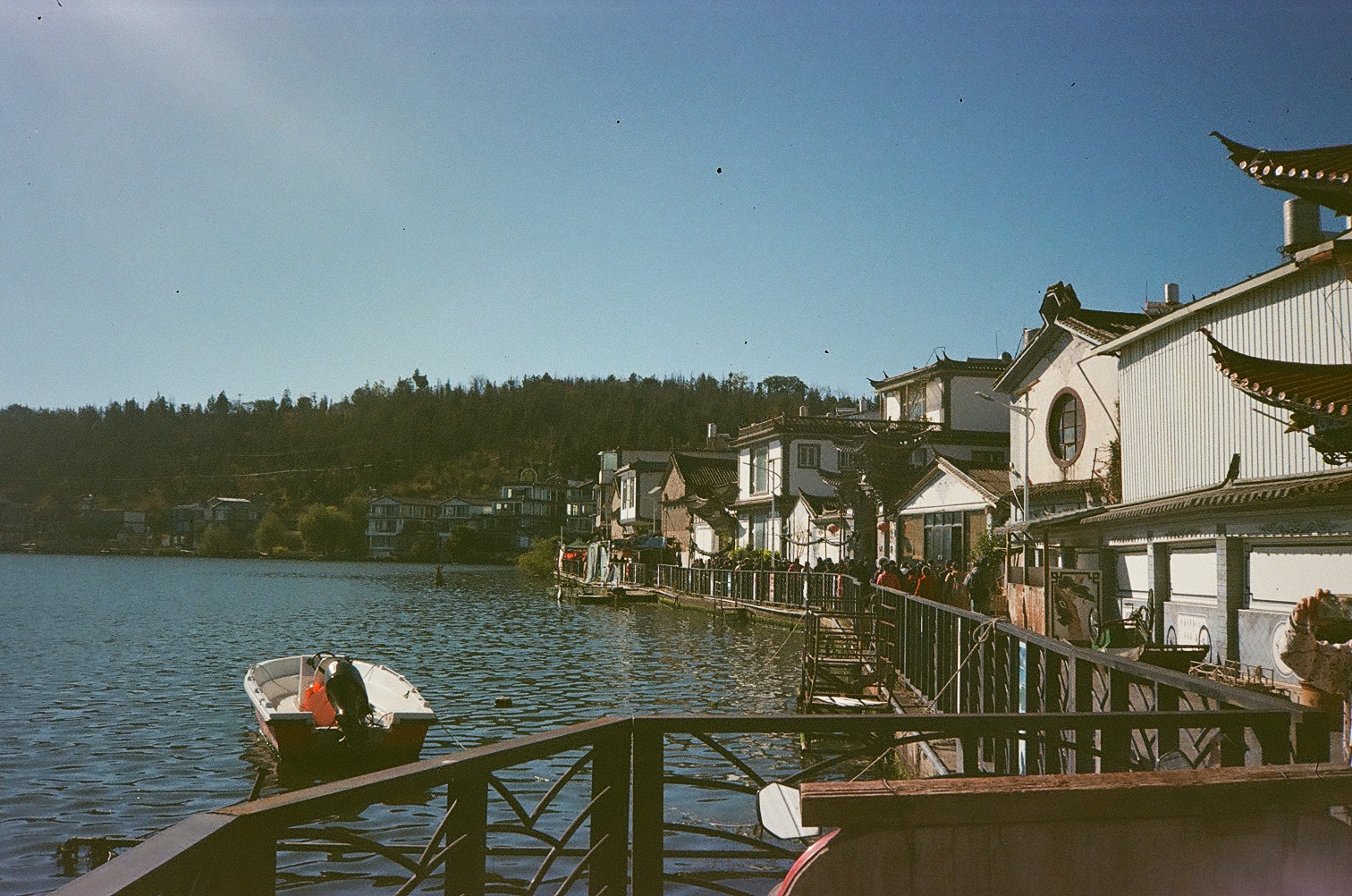
dali, yunnan
Lijiang is built around water, with canals running through the old town and into smaller alleys. Dali sits more openly between mountains and a lake, with enough space around it to breathe. Both towns have been shaped heavily by tourism, but there were still quieter pockets once we stepped away from the busiest streets.
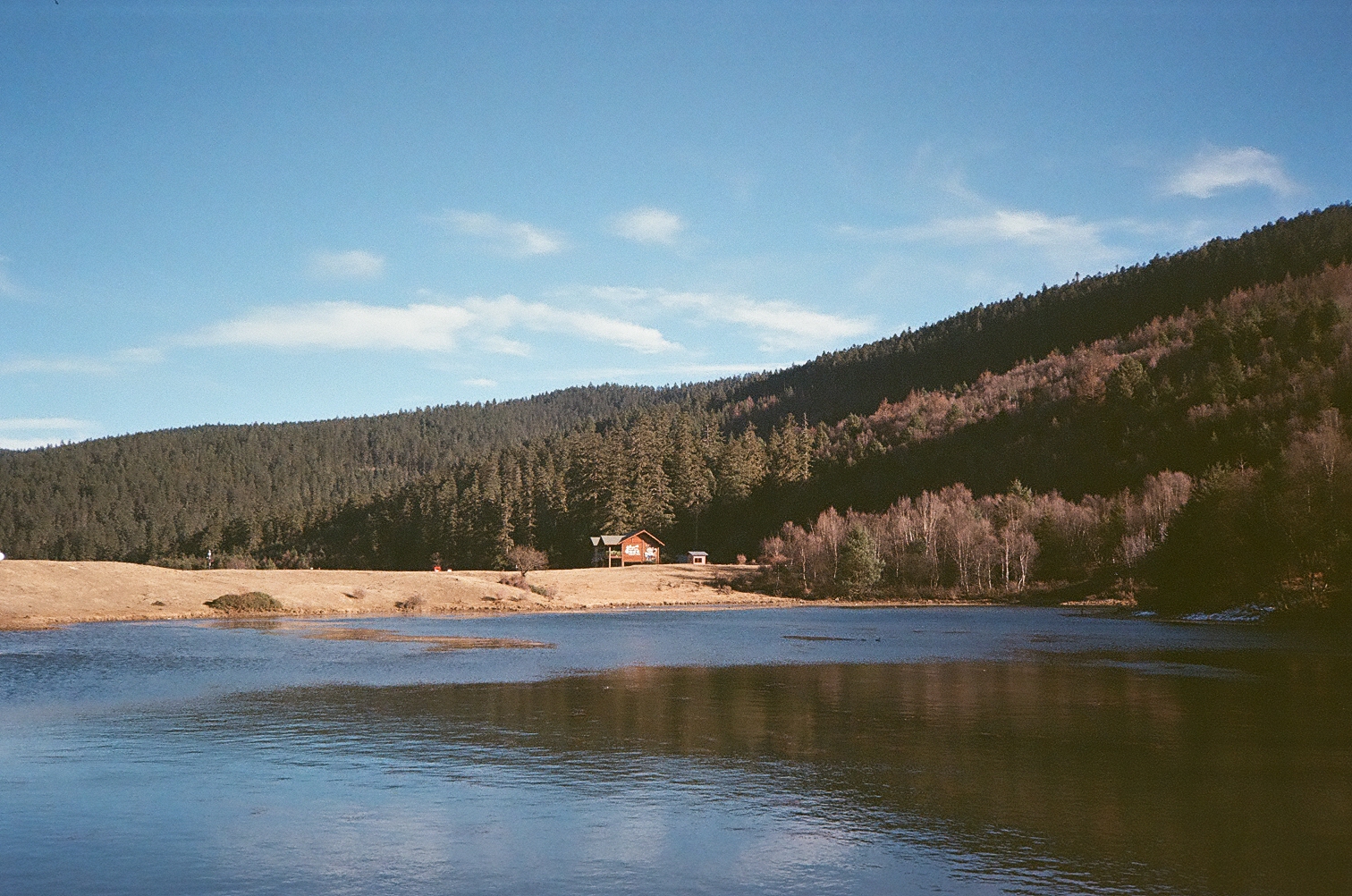
pudacuo, shangri-la
Shangri-La shifted the trip toward Tibetan landscapes. Songzanlin Monastery rises above the city in gold and dark wood, surrounded by grassland, cold air, and prayer flags. Pudacuo National Park felt even further removed, with pine forest, highland lakes, thin air, and very clear water.
Lugu Lake sits on the border of Yunnan and Sichuan, and is home to the Mosuo people, one of the last matrilineal societies in the world. The grandmother heads the household, the women hold the family property, and relationships operate through a practice called zouhun, or walking marriage. Hearing about it from locals made it feel less like an interesting fact and more like a different way people have built family life.
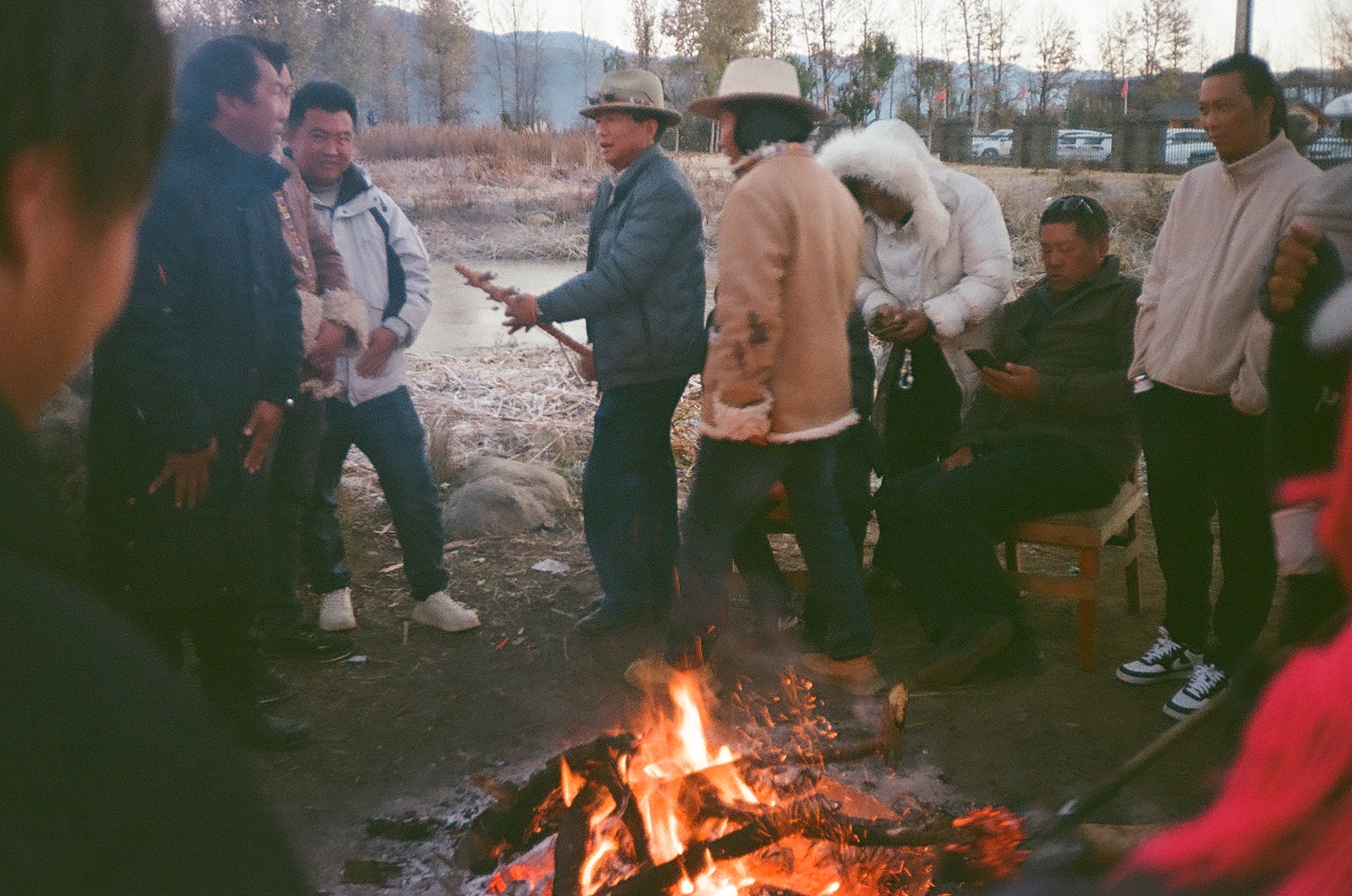
lugu lake, dawn
One morning I went out early and walked along the lakeshore before the day had properly started. I came across a small group of locals around a bonfire, with one person playing erhu while the others sang as the sun came up over the water. Nobody was performing for anyone, which made it better.
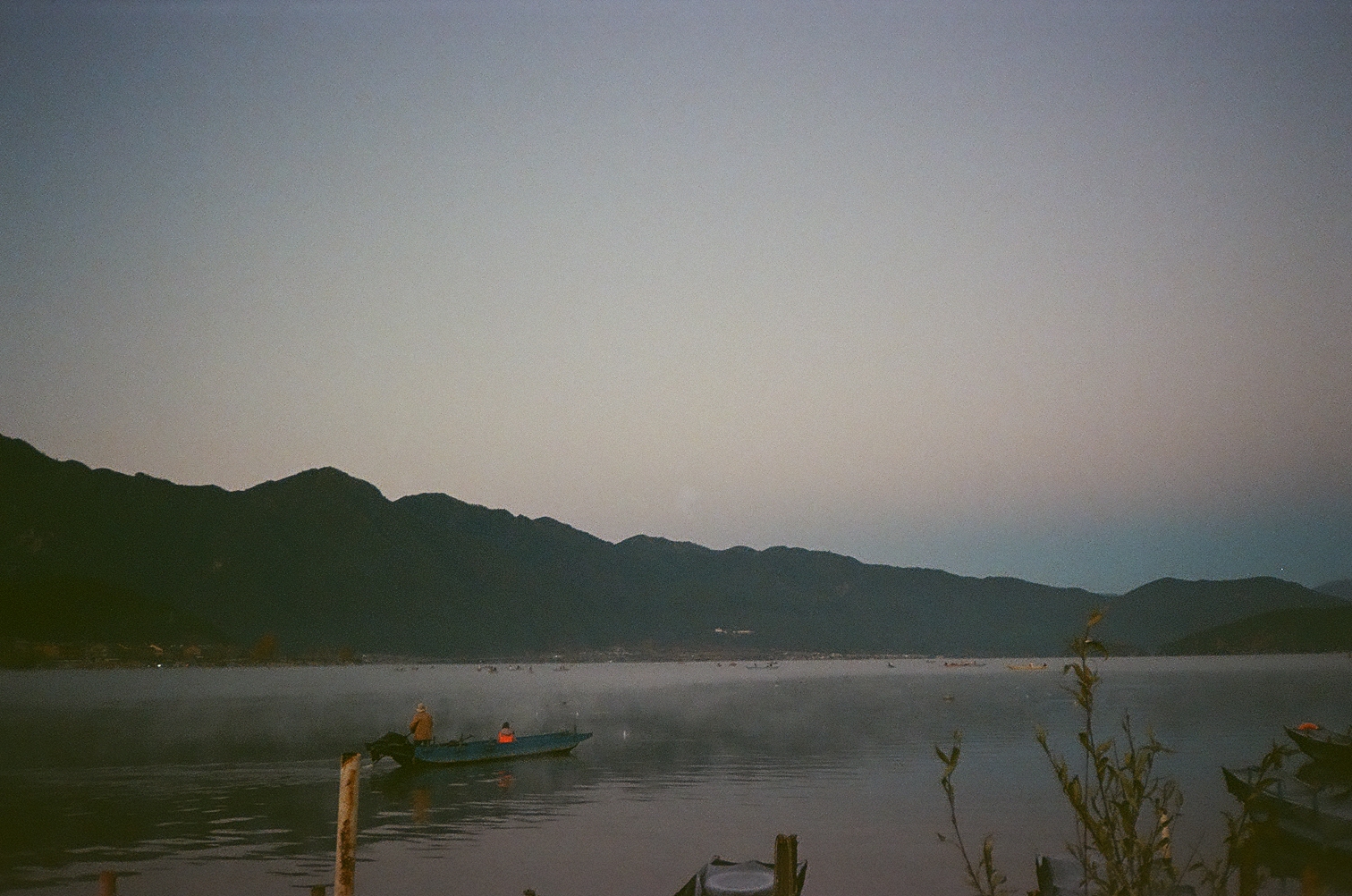
lugu lake, sunrise